 The quick take
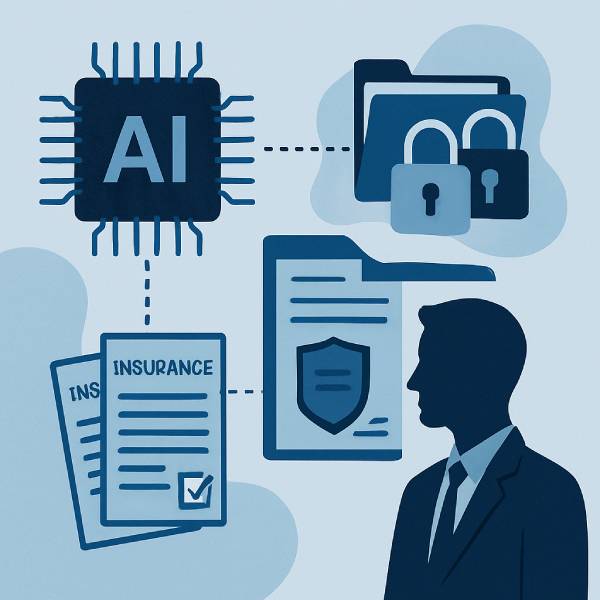
Businesses are adopting generative AI fast—and insurers are responding by tightening terms, adding exclusions, or carving AI-related losses out of coverage. Multiple major carriers have sought or discussed exclusions tied to “any use” of AI in certain liability lines, and industry commentary suggests these exclusions could become more common.
For independent agents, this isn’t “a tech trend.” It’s a coverage interpretation problem, a risk-management conversation, and a documentation opportunity—especially for management liability, professional liability, cyber, media, and tech-adjacent accounts.
Why this is showing up right now
AI risk is tough for insurers to model because it can be:
- Systemic (one model flaw can impact many insureds at once)
- Opaque (hard to explain “why” the model produced an output)
- Fast-moving (vendor terms, product features, and use cases change constantly)
That’s why we’re seeing attempts to exclude or narrow coverage for AI-related allegations, from governance failures to losses triggered by automated decisions.
What “AI-related risk” actually looks like in a claim file
When you strip away the buzzwords, AI loss scenarios tend to land in familiar buckets:
1. Bad advice / bad output
- Wrong pricing quote
- Incorrect medical or legal information
- Faulty engineering or design recommendations
2. IP and content disputes
- Copyright claims from AI-generated marketing assets
- “Training data” questions
- Brand/endorsement misrepresentation
3. Employment & HR
- Bias/discrimination allegations tied to automated screening
- Wrongful termination or adverse employment decisions “assisted” by AI
4. Fraud & social engineering
- Deepfake voice, video, or email spoofing
- AI-assisted phishing that increases frequency and believability
5. Board oversight & disclosures
- “AI washing” (overstating AI capabilities to investors/customers) has been flagged by market commentary as a litigation risk area, with scrutiny from regulators and private litigants.
The agent’s coverage review checklist (simple, effective, repeatable)
At the next renewal (especially commercial), run a 15-minute “AI exposure scan”:
Ask these 6 questions:
- Where are you using AI today? (marketing, service, HR, product, claims, underwriting, coding)
- Is AI used to make decisions that affect customers/employees? (approvals/denials, pricing, hiring)
- Are AI outputs client-facing without human review?
- What data is being fed into AI tools? Any PII/PHI/confidential info?
- Who approves AI vendor terms and privacy settings?
- If a regulator or plaintiff asked for “AI governance,” what would you show them?
Then check these policy areas:
- D&O / Management Liability: governance + disclosures + oversight
- E&O / Professional Liability: negligent advice, failure to perform professional duties
- Cyber: privacy, security failure, social engineering, incident response
- Media / Advertising Injury: IP, defamation, misrepresentation in content
- Tech E&O: software or product failures tied to automated outputs
And document it. A short “AI use + controls” note in the file can matter later.
Risk controls clients can implement (that underwriters actually like)
Give clients a short “controls menu” they can choose from:
- Human-in-the-loop review for anything customer-facing or decision-driving
- No sensitive data policy for general-purpose AI tools (or use approved enterprise tools)
- Prompt & output logging for high-impact workflows
- Vendor due diligence (security posture, data retention, indemnities, subcontractors)
- Disclosure hygiene (avoid “AI washing” language; align marketing with reality)
- Deepfake defenses (call-back verification, dual approval for wire changes)
How Agents United can help members win here
Independent agencies win AI-risk conversations when they have:
- access to markets that understand emerging exposures,
- training and templates,
- peer knowledge to compare wording and endorsements.
That’s the kind of “network advantage” Agents United was built to provide—carrier access, support, and practical tools for growth.