Short-Term Rentals Are Creating New Coverage Conversations for Independent Agents
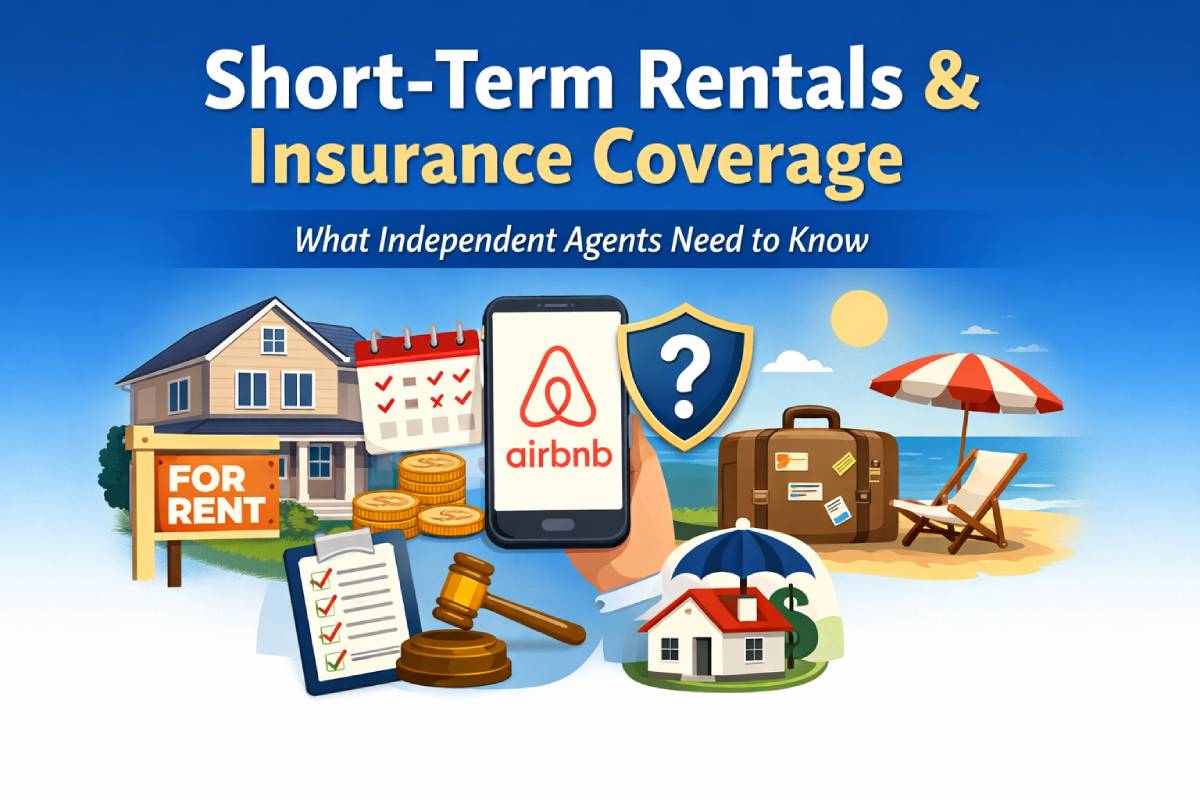
The modern insurance conversation is changing, and not always because a client bought a new house or opened a formal business. Sometimes the change starts with a spare bedroom, a guest house, a condo near the beach, or a property the owner rents out “just a few weekends a month.”
That is exactly why short-term rentals deserve more attention from independent agents.
Many clients do not think of occasional rental activity as a major insurance event. In their mind, they still “just own a home.” But from an exposure standpoint, the risk picture may look very different once paying guests are involved. More foot traffic, more liability, more property-use turnover, and more questions about who is staying there and for how long can all change the conversation quickly.
For independent agents, this is not just a warning sign. It is also an opportunity to lead.
Why This Exposure Gets Missed
Short-term rental risks often slip through the cracks because clients do not always volunteer the information. They may assume a listing on a rental platform is no different than having a family friend stay over. They may think their current homeowners policy “probably covers it.” Or they may only rent the property occasionally and assume occasional means harmless.
That is where agents add value.
The best agencies are not waiting for a claim to expose the gap. They are asking better questions during new business, renewal, and remarketing conversations:
- Is the home ever rented for fewer than 30 days?
- Is there a guest house, ADU, or detached unit being rented out?
- Is a second home being listed seasonally?
- Does the client use any rental platform or property manager?
- Are there paid guests in a condo or community-association setting?
A simple question can uncover a major exposure.
The Real Opportunity for Independent Agents
This is bigger than placing a policy. It is about becoming the advisor who catches what others miss.
When a client’s use of a property changes, the insurance strategy may need to change with it. That can lead to stronger account rounding, better documentation, and deeper trust. It can also open the door to wider discussions about umbrella liability, property improvements, landlord-style exposures, loss-of-income concerns, and whether the client owns more than one property.
In other words, short-term rental conversations are rarely one-line transactions. They are account-development moments.
How to Build a Better Review Process
Agencies do not need a massive new workflow to address this trend. They need a repeatable one.
A strong process might include:
- Add a rental-use question to every renewal review.
Do not rely on memory. Put the question in the workflow. - Train personal-lines staff to recognize red flags.
Words like “guest unit,” “Airbnb,” “vacation rental,” “income property,” or “we only rent it sometimes” should trigger follow-up. - Revisit liability limits.
Even when property placement is handled, liability conversations are often too narrow. - Document the recommendation.
If the client declines a coverage change or review, document it clearly. - Coordinate personal and commercial thinking.
Some exposures live in the gray area between the two. The agency that can think across both wins trust faster.
This Is What Independent Advice Looks Like
The independent-agent advantage has never been about quoting the fastest. It is about seeing the whole risk picture.
Short-term rentals are one more example of why personal insurance is no longer just personal in the old sense. Clients are monetizing homes, adding side-income streams, and changing how property is used. When that happens, coverage should not stay on autopilot.
Agencies that make short-term-rental reviews part of their routine are doing more than protecting accounts. They are showing clients that insurance guidance still matters, especially when life gets less standard.
That is the kind of value that keeps relationships sticky.