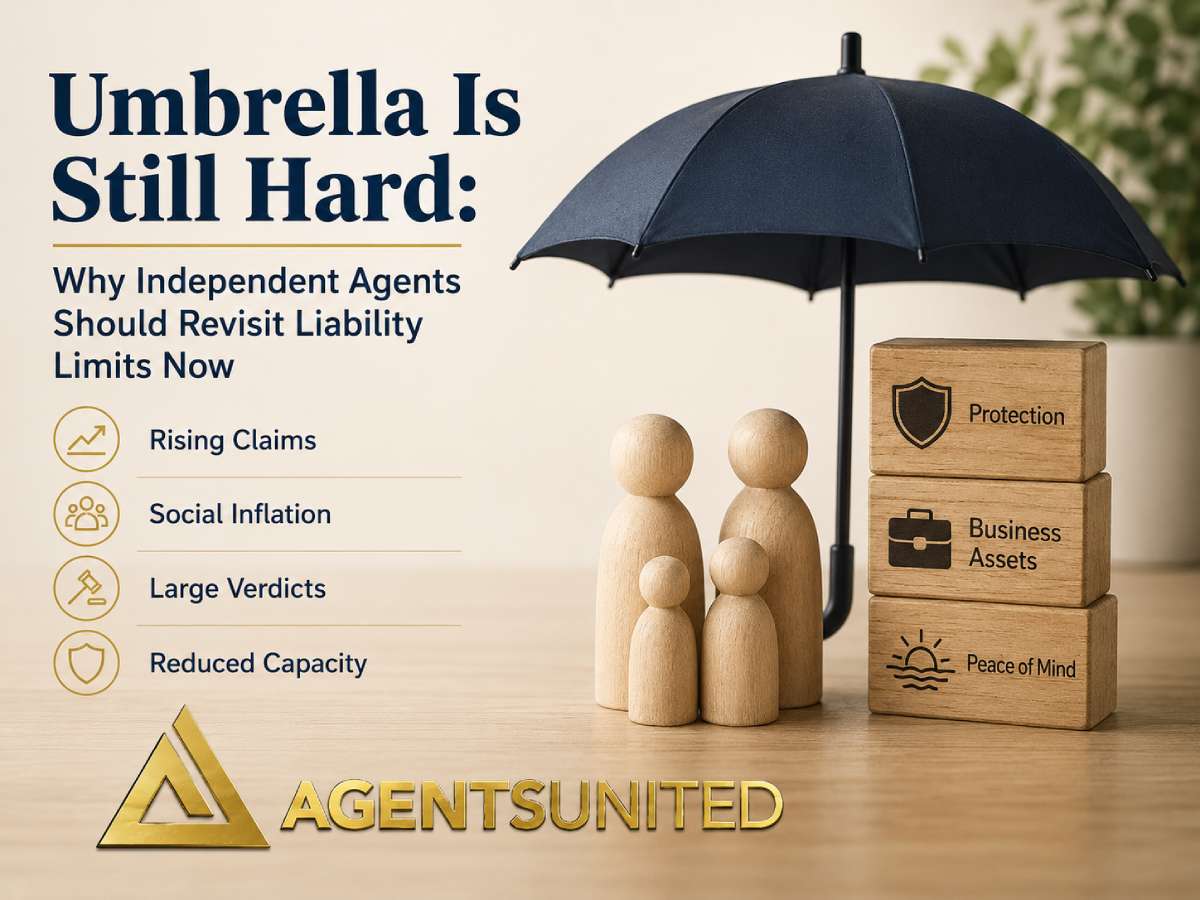
Umbrella Is Still Hard: Why Independent Agents Should Revisit Liability Limits Now
Many areas of the commercial insurance market are finally becoming more competitive.
Umbrella and excess liability are not following the same script.
The Council of Insurance Agents & Brokers reported that umbrella premiums increased an average of 5.3% during the second quarter of 2026, the largest increase among the commercial lines tracked in its survey. Even more notable, Q2 marked the 35th consecutive quarter of umbrella premium increases, while 40% of respondents reported decreasing umbrella capacity.
For independent agents, that creates an important client conversation.
The question is no longer simply whether a client has an umbrella policy.
It is whether the client’s current liability structure still makes sense.
Why Umbrella Remains Difficult
Several factors continue to pressure liability insurance.
Social inflation, litigation costs, large jury awards, third-party litigation funding, and increasing claim severity are putting pressure on insurers.
Commercial auto continues to be particularly challenging, but the issue goes beyond trucking companies.
Businesses with significant auto exposure, products liability, habitational risks, large numbers of customers, contractors, or other high-severity exposures may also face greater scrutiny.
While commercial property and several other lines have become more competitive, umbrella and commercial auto remained among the most difficult commercial lines during 2026. (Insurance Journal)
Limits Should Not Be a Set-It-and-Forget-It Decision
A business that purchased a $1 million or $2 million umbrella years ago may still renew the same limit every year without reconsidering whether it is adequate.
Meanwhile, the business may have grown.
It may now have:
- More vehicles
- Higher revenue
- More employees
- Additional locations
- Larger contracts
- More valuable customers
- New operations
- Greater public interaction
- Higher asset values
The liability limit stayed the same while the exposure grew.
That creates an opportunity for agents to move the conversation away from premium and toward balance-sheet protection.
Start With the Exposure, Not the Existing Limit
Instead of asking:
“Do you want to renew the same umbrella?”
Try starting with:
“What has changed in your business since we selected this liability limit?”
Review areas such as:
- Fleet size
- Employee count
- Revenue
- Contract requirements
- Locations
- Products
- Subcontractor use
- Property ownership
- Customer traffic
- International operations
- Prior claims
- New acquisitions
The correct limit should begin with the client’s exposure—not last year’s policy.
Contracts Can Quietly Increase Liability Needs
Commercial clients frequently sign agreements requiring higher liability limits.
Construction agreements, leases, vendor contracts, franchise agreements, and customer contracts can contain insurance requirements that materially change the client’s needs.
Agents should encourage clients to provide insurance-related contract requirements before signing whenever possible.
A new contract could require:
- Higher general liability limits
- Additional insured status
- Primary and noncontributory wording
- Waiver of subrogation
- Higher auto liability limits
- Specific umbrella limits
Finding those requirements after the contract begins can create unnecessary placement problems.
Start Umbrella Renewals Earlier
Reduced capacity makes early renewal preparation increasingly important.
Higher-hazard accounts may require several carriers or layers to achieve the desired total limit.
Waiting until the last minute can reduce options.
For larger or challenging accounts, agents should consider starting the renewal process early enough to:
- Confirm desired limits.
- Update exposure information.
- Obtain current loss runs.
- Explain significant claims.
- >Document risk improvements.
- Review underlying limits.
- Identify alternative markets when necessary.
A clean submission can become especially valuable when capacity is selective.
Higher Prices Can Create a Dangerous Client Reaction
When umbrella premiums rise, some insureds may respond by cutting limits.
That might improve the immediate budget while increasing long-term risk.
Agents can add value by helping clients understand the decision in financial terms.
Rather than discussing only the cost of another $1 million in coverage, discuss what portion of the business’s assets could be exposed after a severe liability claim.
The conversation becomes:
“How much risk does the business want to retain?”
rather than:
“How much insurance do you want to buy?”
Market Access Matters
Challenging liability accounts can require access to multiple standard and specialty markets.
That is one reason carrier relationships and agency-network resources can become particularly valuable when individual markets tighten.
Agents United helps independent agencies broaden carrier access while providing training, resources, compensation opportunities, and support that can help members compete in challenging commercial-lines environments.
Make Liability Reviews Part of the Commercial Renewal Process
Umbrella and excess liability should not be an automatic renewal.
In a market defined by larger claims and selective capacity, independent agents can provide significant value simply by reopening the conversation.
Review the exposure.
Review the contracts.
Review the underlying limits.
Review the client’s financial position.
Then determine whether yesterdays liability tower is still appropriate for tomorrows risk.