The Data Center Boom Is Creating a New Commercial Lines Opportunity for Independent Agents
Artificial intelligence is not only changing software. It is changing the physical landscape of American business.
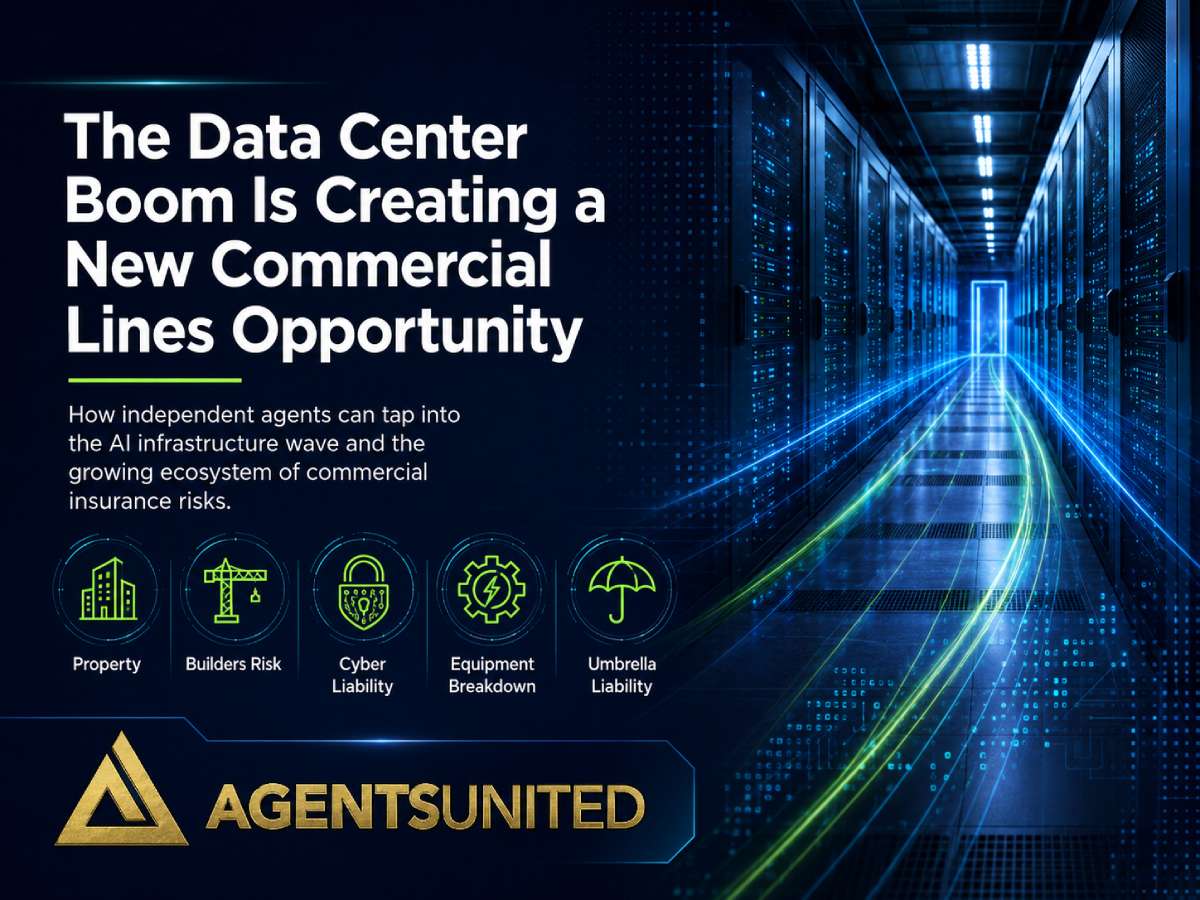
Across the country, billions of dollars are being invested in new data centers to support AI, cloud computing, digital services, and the enormous computing capacity these technologies require. For independent insurance agents, this infrastructure boom could create an important new commercial-lines opportunity.
Data centers have evolved from specialized technology facilities into critical infrastructure. Estimates for the global data-center insurance market could more than double to approximately $24 billion by 2030. At the same time, insurers are confronting risks that are larger and more interconnected than those associated with traditional commercial buildings.
Independent agencies do not need to specialize exclusively in hyperscale facilities to benefit from this trend. The opportunity extends throughout the businesses supporting data-center construction and operation.
Data Centers Create an Entire Insurance Ecosystem
A data center involves much more than a building filled with computer servers.
Development can require contractors, electricians, HVAC specialists, engineers, security companies, equipment suppliers, backup-power providers, telecommunications contractors, maintenance companies, and many other businesses.
That means opportunities may exist across multiple commercial insurance lines, including:
- Commercial property
- General liability
- Builders risk
- Contractors equipment
- Inland marine
- Equipment breakdown
- Business interruption
- Cyber liability
- Technology errors and omissions
- Environmental liability
- Workers’ compensation
- Commercial auto
- Excess and umbrella liability
For an independent agent, the opportunity may therefore be less about landing a massive data-center account and more about identifying clients and prospects participating in the broader data-center economy.
The Risks Are Different From Traditional Commercial Real Estate
Data centers combine expensive property with unusually high concentrations of technology and infrastructure.
A relatively small physical event can create a disproportionately large financial loss.
Power failure, cooling-system problems, equipment damage, water intrusion, fire, network disruption, or delays during construction can affect millions of dollars in technology while interrupting critical digital operations.
The value of GPUs and other computing equipment adds another complication. High equipment values, commissioning delays, on-site power generation, construction schedules, and contractual power obligations can create significant exposures that require carefully coordinated insurance programs.
Agents working with these accounts need to understand not only what the facility owns, but how it operates.
Business Interruption Deserves Extra Attention
Business-income coverage can become particularly complex for technology-dependent operations.
A data center may physically survive an incident but still be unable to operate because of:
- Power disruption
- Cooling failure
- Network problems
- Equipment breakdown
- Supply-chain delays
- Utility interruption
- Damage to interconnected facilities
Traditional assumptions about restoration periods may not always work.
Replacement equipment can be highly specialized, and commissioning new systems may take significant time. Agents should work closely with carriers and wholesalers to understand waiting periods, limits, restoration assumptions, contingent exposures, and coverage triggers.
Ask Clients Whether They Are Entering the Data Center Supply Chain
Existing commercial clients may already be participating in this growth without the agency realizing it.
A contractor that traditionally worked on warehouses might suddenly begin installing electrical systems at data centers. An HVAC company might start servicing specialized cooling equipment. A security contractor may win a contract involving mission-critical facilities.
That change in operations can materially change the insurance exposure.
Adding a simple question during commercial reviews can help:
“Have you started performing any work for data centers, technology facilities, or other mission-critical infrastructure?”
If the answer is yes, the agency can determine whether current classifications, limits, endorsements, and markets still fit the account.
Build a Data Center Prospecting Strategy
Independent agencies looking for commercial growth can also build targeted prospect lists around data-center development in their regions.
Look beyond the facility owner.
Potential prospects include:
- General contractors
- Electrical contractors
- Mechanical contractors
- Cooling-system companies
- Fire-suppression contractors
- Security companies
- Generator and power-system contractors
- Technology installers
- Engineering firms
- Equipment transportation companies
- Facility maintenance providers
This can turn a major economic trend into a focused commercial-lines growth campaign.
Where an Agency Network Can Help
Emerging industries can be difficult for an independent agency to navigate alone. Carrier appetite can vary significantly, and some risks may require specialty-market expertise.
Being connected to a larger independent-agency network can give agencies additional carrier relationships, market intelligence, training, and resources while allowing them to maintain their independence.
Agents United helps independent P&C agencies expand carrier access, strengthen compensation opportunities, and gain additional training and support.
Follow the Infrastructure, Not Just the Headlines
The AI boom may dominate technology headlines, but the insurance opportunity is happening on the ground.
Every new data center creates an ecosystem of contractors, suppliers, service companies, and infrastructure providers that need insurance.
Independent agents who learn to identify those exposures early can turn one of the largest infrastructure trends of the decade into a meaningful commercial-lines growth opportunity.