
The insurance distribution model is changing quickly—and independent agencies should be paying attention.
Recent headlines around captive-agent contract changes, AI-driven tools, revised compensation structures, and shifting production expectations are a reminder that agents do not just need access to carriers. They need optionality, ownership, and control over the future of their agency.
For many agents, the biggest issue is not technology itself. Technology can help agents quote faster, service clients more efficiently, and uncover coverage opportunities. The bigger issue is what happens when the business model changes around the agent. When a carrier controls the contract, compensation structure, product mix, and technology roadmap, the agent may have less control than they think.
That is why the independent agency model continues to matter.
The Difference Between Support and Control
Every agency needs support. Carrier access, training, marketing resources, technology, and operational guidance can make a meaningful difference in growth. But support should strengthen the agency—not replace the agency owner’s decision-making.
This is where independent agents have a unique advantage. They can build their own brand, maintain local relationships, serve clients across multiple markets, and adapt when carrier appetite changes. Instead of being tied to one company’s direction, independent agents can help clients compare options and navigate coverage decisions with more flexibility.
Agents United supports independent agencies with carrier access, profit-sharing opportunities, training, marketing, tools, and management resources while helping agencies grow without giving up their independence.
Why Optionality Matters
Insurance is becoming more digital, more data-driven, and more competitive. Customers expect faster answers, easier service, and more personalized recommendations. At the same time, carriers are looking for efficiency, profitability, and better risk selection.
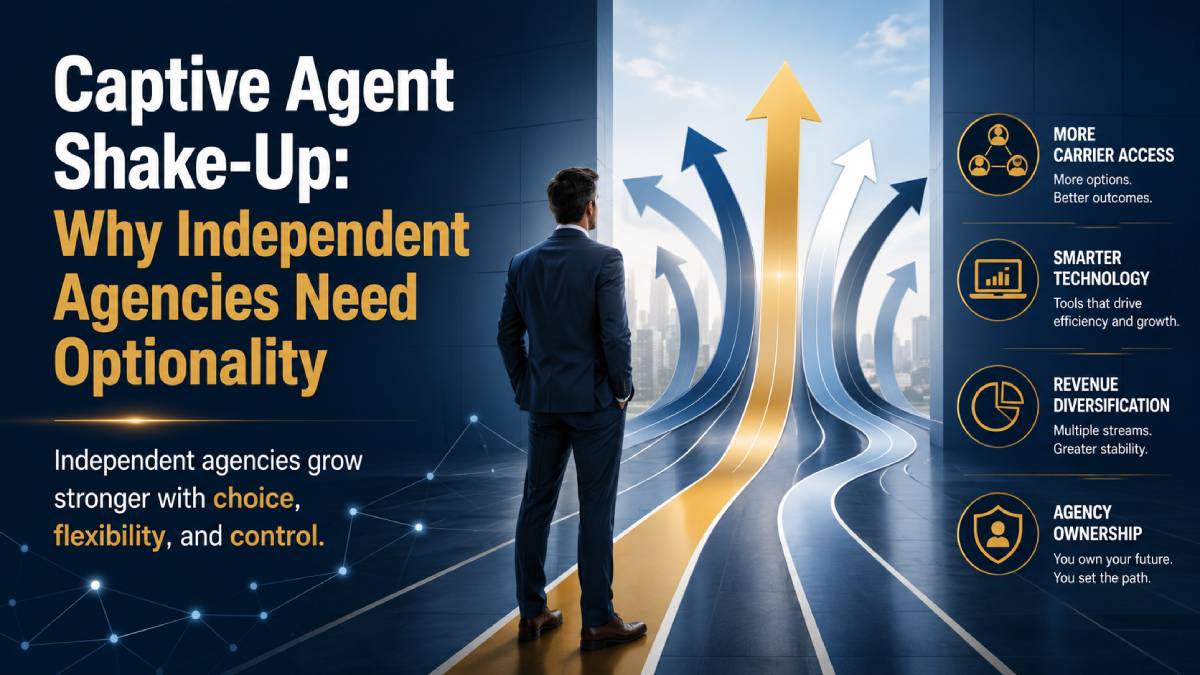
For independent agents, optionality matters in four major ways:
1. Carrier Optionality
If one carrier tightens appetite, changes pricing, exits a segment, or becomes less competitive, the agency needs alternatives. A strong carrier lineup helps agencies protect relationships instead of sending clients elsewhere.
2. Revenue Optionality
Independent agencies can build revenue through personal lines, commercial lines, life, specialty products, profit-sharing opportunities, and account rounding. The more diversified the revenue base, the less dependent the agency becomes on one carrier or one line of business.
3. Technology Optionality
Digital tools should help agencies serve clients better. But agencies should be careful not to let technology become a substitute for relationship-building. The best model is not human versus digital. It is human plus digital.
4. Ownership Optionality
Agency owners should be building long-term value. That means protecting client relationships, documenting processes, developing staff, maintaining clean data, and creating a business that can grow, transition, or expand on the owner’s terms.
What Independent Agencies Should Do Now
Independent agencies can use this moment as a planning opportunity. Start by reviewing your carrier mix, revenue concentration, client communication process, and technology stack. Ask whether your agency has enough flexibility to respond if market conditions shift.
Then look at your client experience. Are you giving clients proactive guidance, or are you only reacting at renewal? Are you explaining coverage clearly, or only delivering quotes? Are you using tools to make service faster, or are staff members still buried in manual work?
Finally, evaluate your growth partnerships. The right network should help you gain access, improve profitability, and compete with larger organizations—without taking away the independence that makes your agency valuable in the first place.
Independence Is Still a Growth Strategy
The future of insurance will include more automation, more digital tools, and more pressure on distribution models. But that does not reduce the value of independent agents. It raises the bar.
Clients still need trusted advisors who can explain coverage, compare options, advocate during difficult moments, and help them make smart decisions. Independent agencies that combine strong carrier access, local relationships, modern tools, and strategic support will be positioned to compete.
Agents United gives independent agencies the backing of a larger network while helping them preserve what matters most: their ownership, their relationships, and their ability to grow on their own terms.