A client may buy insurance because of price, coverage, or carrier reputation. But they often decide whether they trust their agent after a claim.
That makes claims advocacy one of the most important client experience opportunities for independent insurance agencies. When a loss happens, clients are stressed, confused, and looking for guidance. They may not understand deductibles, exclusions, claim timelines, repair estimates, documentation requirements, or what the carrier needs next.
The agency that steps in with clarity becomes more than a policy provider. It becomes a trusted advocate.
Claims Service Is Part of the Client Experience
Today’s policyholders expect fast, connected service across both digital and human touchpoints. Deloitte’s 2026 insurance outlook notes that customer experience is a key driver of retention and growth, with policyholders wanting speed and personalized solutions across digital and human channels. (Deloitte)
That does not mean clients only want a portal or an app. In fact, when customers are forced to jump between channels to resolve one issue, satisfaction can suffer. J.D. Power’s 2026 U.S. Auto Insurance Study found that agents resolved 91% of cross-channel inquiries once engaged, while website resolution was lower. (JD Power)
That is a major opportunity for independent agents.
Build a Claims Advocacy Playbook
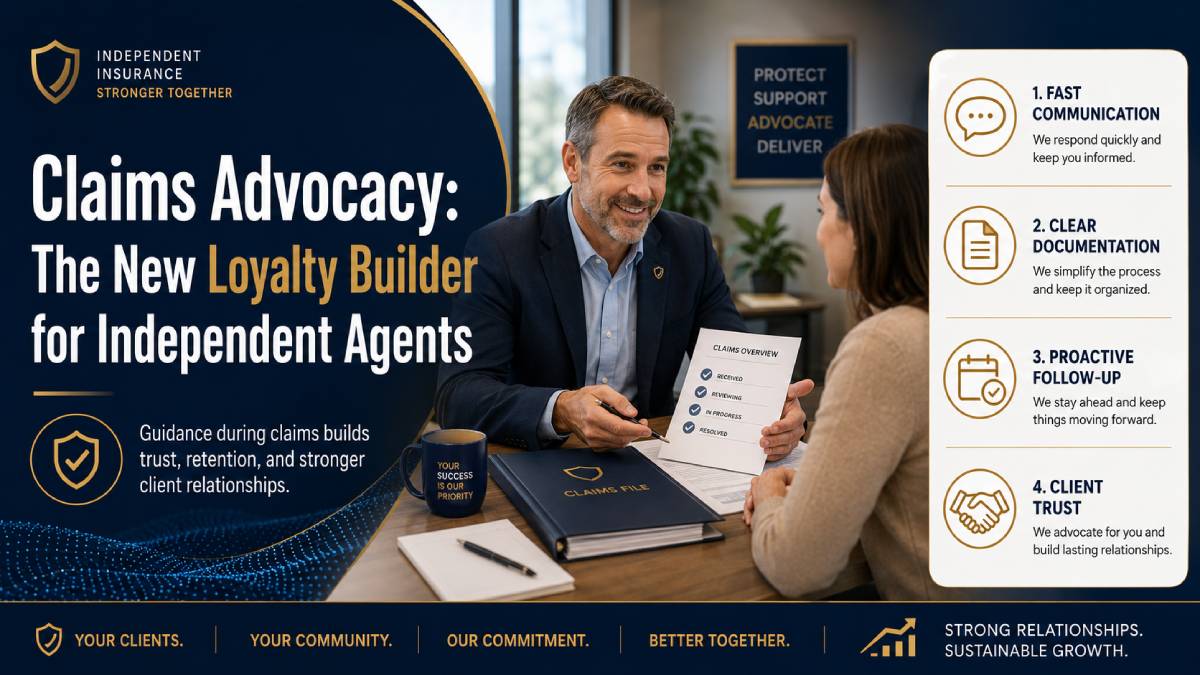
Agencies should not wait until a client is dealing with a loss to decide how claims support will work. A clear claims advocacy playbook helps staff respond consistently and helps clients feel supported from the first call.
Here are key pieces to include:
1. A First-Notice Conversation Guide
When a client reports a claim, the first conversation matters. Staff should know what information to collect, what not to promise, and how to explain the next steps. The goal is to reduce panic and set clear expectations.
2. Documentation Checklists
Clients often do not know what to document after a loss. Provide simple checklists for photos, receipts, repair estimates, police reports, mitigation steps, and communication records.
3. Deductible and Coverage Reminders
A claim is not the time for a client to discover they misunderstood their deductible or coverage limits. Agencies can reduce frustration by reviewing these issues before renewal and again when a claim occurs.
4. Follow-Up Cadence
Do not assume the carrier’s communication is enough. A simple follow-up schedule—24 hours after the claim, one week later, and after resolution—can make clients feel seen and supported.
5. Post-Claim Review
After the claim is resolved, schedule a coverage review. Ask what changed, what the client learned, and whether their current coverage still fits their needs. This turns a difficult experience into a retention and education opportunity.
Claims Advocacy Helps Protect the Agency Relationship
When clients feel lost during a claim, they may blame the carrier, the policy, or the agent. Even if the agency did nothing wrong, poor communication can damage trust.
Claims advocacy helps protect that relationship. It shows clients that the agency is involved, informed, and ready to help them navigate the process. It also creates opportunities to explain coverage limitations before frustration turns into dissatisfaction.
For commercial clients, claims advocacy can be even more valuable. A business owner dealing with property damage, liability allegations, employee injuries, or business interruption needs guidance fast. Independent agents who help clients prepare before a loss can become an essential part of that business’s risk management team.
Turn Claims Into a Differentiator
Many agencies talk about service. Claims advocacy proves it.
Independent agencies can use claims support as a clear differentiator in sales conversations, renewal meetings, and onboarding. Instead of only saying, “We are here when you need us,” show prospects the actual process:
- What to do after a loss
- Who to contact
- What information to gather
- How the agency follows up
- How coverage is reviewed afterward
That kind of clarity builds confidence.
Agents United Helps Agencies Compete Through Service
Independent agencies do not have to compete with large carriers or direct writers on advertising budgets alone. They can compete through advice, access, advocacy, and relationships.
Agents United supports independent agencies with the tools, training, carrier relationships, and network support they need to grow while continuing to serve clients personally. In a market where speed matters and trust still wins, claims advocacy can become one of the strongest loyalty builders an agency has.