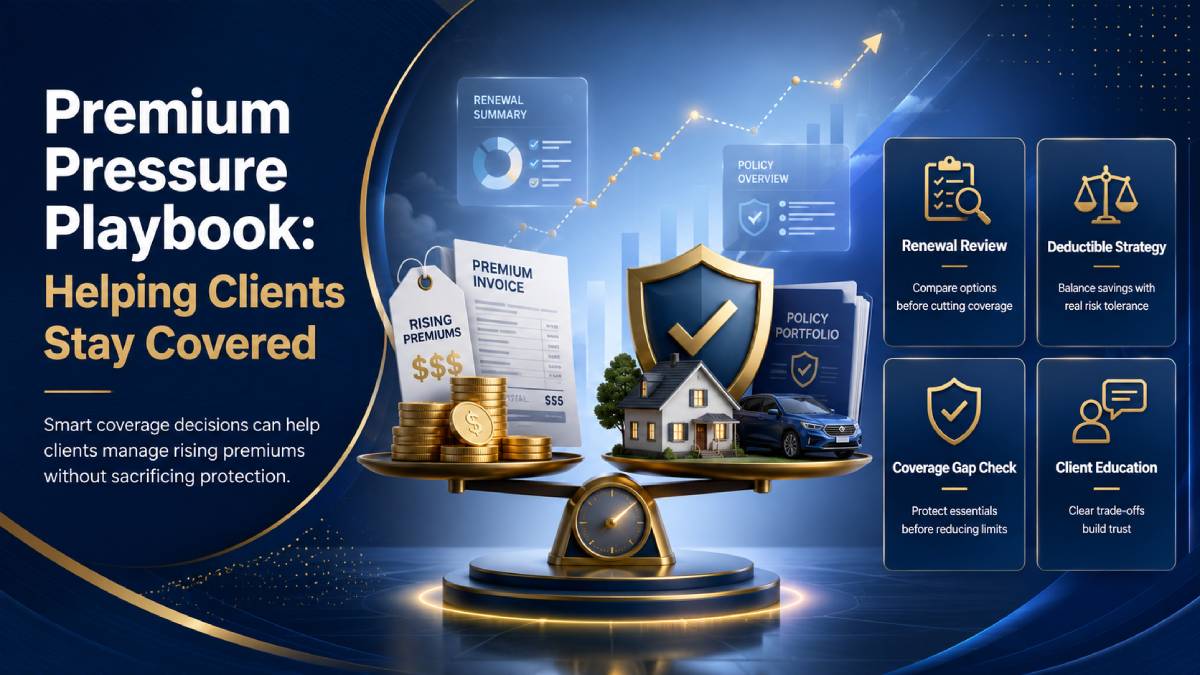
Insurance affordability is one of the biggest client conversations agencies are having right now.
After several years of rising premiums, many clients are tired. Some are shopping more aggressively. Others are increasing deductibles, reducing limits, removing coverage, or considering options that may leave them exposed. Even as some market indicators show signs of stabilization, clients are still feeling the pressure.
A recent report showed that the U.S. P&C premium growth slowed from 9% to 4% in market data through third-quarter 2025 and projected premium growth of 3% in 2026. But slower growth does not mean clients suddenly feel relief. J.D. Power’s 2026 U.S. Insurance Shopping Study found that the share of customers shopping for auto insurance declined from 57% to 53% year over year, but remains elevated by historical standards. (JD Power)
That creates a clear role for independent agents: help clients make smarter cost decisions without creating dangerous coverage gaps.
Do Not Let Price Be the Only Conversation
When clients say, “I need a cheaper policy,” the easy response is to quote and requote. But the better response is to slow the conversation down.
Ask questions like:
- What changed in your budget?
- Are you trying to lower monthly payments or total annual premium?
- Are you comfortable taking on more out-of-pocket risk?
- Have your assets, income, property, vehicles, or business exposures changed?
- Do you understand what would happen if you reduce this coverage?
These questions reposition the agent as an advisor instead of a price-taker.
Present Options, Not Just One Quote
A strong renewal conversation should give clients choices. Instead of only presenting the lowest premium, consider a three-option framework:
Option 1: Best Coverage Fit
This option prioritizes protection. It may not be the cheapest, but it shows the client what strong coverage looks like based on their current risk profile.
Option 2: Balanced Savings
This option identifies reasonable adjustments—deductible changes, discounts, bundling, payment changes, or carrier alternatives—without removing essential protection.
Option 3: Minimum Acceptable Coverage
This option shows the lowest reasonable recommendation the agency is comfortable presenting. It should also clearly explain what the client is giving up.
This approach helps clients see trade-offs clearly. It also protects the agency from being viewed as only a quote provider.
Watch for Hidden Coverage Gaps
When clients are under premium pressure, they may make quick decisions that create bigger problems later. Independent agents should watch for:
- Liability limits that are too low
- Deductibles the client cannot realistically afford
- Missing endorsements
- Reduced replacement-cost protection
- Gaps between personal and commercial use
- Business property or equipment undervaluation
- Uninsured or underinsured motorist concerns
- Exclusions the client does not understand
The goal is not to scare clients. The goal is to make sure they understand the consequences before making changes.
Use Education to Build Trust
J.D. Power’s 2026 U.S. Auto Insurance Study found that policy understanding has a major impact on satisfaction with price for coverage. (JD Power) That matters for independent agents because clients are more likely to accept difficult pricing news when they understand what they are paying for.
Agencies can improve understanding by using simple explanations:
- “Here is what changed.”
- “Here is what the carrier is looking at.”
- “Here are the discounts we reviewed.”
- “Here is the risk if we reduce this coverage.”
- “Here are the options I recommend.”
This kind of communication makes the client feel guided instead of sold.
Turn Premium Pressure Into a Retention Opportunity
Premium pressure can create frustration, but it also creates an opportunity for independent agents to prove their value. Clients do not just need a cheaper quote. They need someone who can compare markets, explain trade-offs, protect them from risky decisions, and help them feel confident.
Agents United helps independent agencies strengthen that position through carrier access, training, tools, and support designed to help agencies compete and grow. With the right resources, independent agents can turn difficult renewal conversations into stronger client relationships.